
Why Are Activity Classes Important for Children?
School provides children with academic learning, but activities outside regular classroom hours can give them opportunities to explore movement, creativity, social interaction and new interests.
For parents in Guwahati, there are several types of children’s activity classes to consider, including dance, gymnastics, martial arts, music, art and fitness-based activities.
The right activity depends on the child’s age, interests, personality and daily schedule.
Popular Kids Activities in Guwahati
Dance Classes
Dance is one of the most popular activities for children.
Depending on the child’s interests, parents can explore:
- Hip Hop
- Bollywood
- Freestyle
- Modern dance
- Contemporary dance
- Bharatanatyam
- Kathak
Dance classes can introduce children to rhythm, coordination, movement and performance.
For children who enjoy music and performing, dance can become both a creative outlet and a regular physical activity.
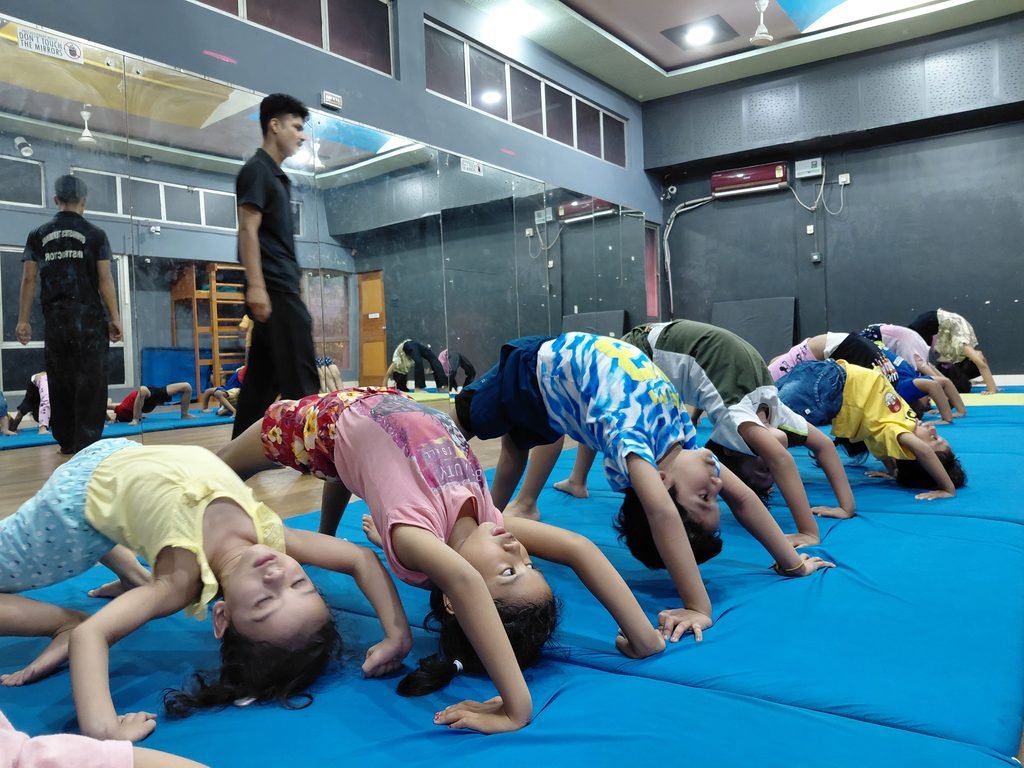
Gymnastics for Children
Gymnastics involves movements that develop skills such as coordination, balance, flexibility and body control.
Children’s gymnastics classes may include activities such as:
- Balancing exercises
- Basic floor movements
- Flexibility exercises
- Jumps
- Coordination drills
- Strength-building activities
- Age-appropriate gymnastics skills
Classes should be appropriate for the child’s age and ability, with proper supervision and progression.
Martial Arts and Taekwondo
Martial arts can provide children with structured physical activity and opportunities to learn movement techniques and discipline.
Taekwondo, for example, involves kicking techniques, movement patterns and structured training.
Parents should look for age-appropriate instruction and an instructor who prioritizes safe technique and controlled practice.
Art and Creative Activities
Not every child enjoys sports or physical activities.
Art, drawing, craft and other creative classes can provide children with opportunities to develop their imagination and express themselves.
A balanced activity schedule can include both physical and creative activities depending on the child’s interests.
Music and Performing Arts
Children who enjoy singing, instruments or stage performance may be interested in music and performing arts classes.
These activities can complement dance training and give children opportunities to develop confidence and presentation skills.
How to Choose a Kids Activity Class
Choosing an activity is not simply about finding the most popular class.
Parents can consider the following factors.
1. Your Child’s Interest
Start with what your child actually enjoys.
If your child is constantly dancing to music, a dance class may be a natural starting point.
If they enjoy climbing, jumping and physical challenges, gymnastics might be more appealing.
2. Age-Appropriate Training
A class should match the child’s age and developmental level.
Young children generally need activities that are shorter, engaging and appropriately structured, while older children may be ready for more technical training.
3. Instructor
The instructor plays an important role in a child’s experience.
Parents can ask:
- Does the instructor work with children regularly?
- Is the teaching approach encouraging?
- Are activities age-appropriate?
- Is the class properly supervised?
- How does the instructor handle beginners?
4. Class Size
A very large class can make individual attention more difficult.
Ask about the approximate number of children in the class and whether the instructor has adequate support.
5. Location
For after-school activities, convenience matters.
A class that is reasonably close to home or school can make regular attendance easier for both parents and children.
6. Timings
Look for a schedule that does not unnecessarily interfere with:
- School
- Homework
- Tuition
- Rest
- Family time
Children generally benefit from having a manageable routine rather than an overcrowded schedule.
After-School Activities: How Much Is Enough?
Children do not need to join every available activity.
A better approach is to choose activities that fit comfortably into their weekly routine.
For example, a child might attend:
Dance: 2 days per week
Gymnastics: 1–2 days per week
Creative activity: once a week
The exact routine should depend on the child’s age, school schedule, interests and overall activity level.
The goal should be to create a routine that the child enjoys and can maintain.
Dance or Gymnastics: Which Should Your Child Try?
These activities develop different skills.
| Dance | Gymnastics |
|---|---|
| Rhythm and musicality | Balance and body control |
| Choreography | Coordination |
| Performance | Flexibility |
| Musical expression | Strength and movement skills |
| Creative expression | Physical skill development |
There is no need to treat them as competing choices.
Some children enjoy doing both, particularly when the classes are appropriately scheduled.
Activities for Younger Children
Younger children often benefit from activities that are playful and movement-oriented rather than highly technical.
Depending on age and class structure, options may include:
- Beginner dance
- Toddler movement classes
- Basic gymnastics
- Creative activities
- Music and rhythm
- Simple physical games
For very young children, parents should pay particular attention to the instructor’s experience with that age group.
Activities for School-Age Children
School-age children can usually explore a wider range of activities.
Depending on their interests, they may try:
- Dance
- Gymnastics
- Taekwondo
- Music
- Art
- Sports
- Performing arts
This is also a useful age for children to discover whether they want to pursue an activity more seriously.
Performance Opportunities Can Add Motivation
Some children enjoy having a goal to work towards.
Dance performances, competitions, demonstrations and cultural programmes can give children opportunities to practice and present what they have learned.
However, performance should remain a positive experience rather than becoming unnecessary pressure.
Parents can ask whether a class provides optional opportunities for children to perform on stage or participate in events.
What Should Parents Check Before Enrolling?
Before paying for a class, consider attending a demo or visiting the studio.
Ask about:
- Trial or demo classes
- Fees
- Class duration
- Weekly frequency
- Age group
- Instructor
- Class size
- Performance opportunities
- Make-up classes
- Holiday arrangements
- What children need to bring
A short visit can often tell you more about a class than an advertisement.
Kids Activity Classes at Urban Beats Performing Arts
Urban Beats Performing Arts offers several activity options for children in Guwahati.
Depending on age and class availability, children can explore dance, modern dance, Bharatanatyam, Kathak, gymnastics and Taekwondo.
The studio has locations in Rajgarh and Kumarpara, making it possible for families to choose a location and schedule that works for them.
For parents who are unsure which activity would suit their child, a conversation with the instructor or a demo class can be a useful starting point.
Frequently Asked Questions
What are the best activities for kids in Guwahati?
There is no single activity that suits every child. Dance, gymnastics, martial arts, music, art and sports can all be considered depending on the child’s interests and age.
At what age can children start activity classes?
It depends on the activity and the individual child. Some movement-based classes are designed for young children, while more technical training is generally introduced progressively as children grow.
Are dance classes good after school?
Dance can be a useful after-school activity for children who enjoy music and movement. Parents should choose a schedule that leaves enough time for schoolwork, rest and family life.
Can children do dance and gymnastics together?
Yes, children can participate in both if the schedule is manageable and the classes are appropriate for their age and ability.
How many activities should my child join?
There is no fixed number. It is generally better to choose a manageable number of activities that the child genuinely enjoys rather than filling every available afternoon.
Should I attend a demo class before enrolling my child?
A demo class or studio visit can help parents understand the teaching style, environment, class structure and whether the child feels comfortable.
Final Thoughts
Kids activity classes can give children opportunities to move, create, learn and discover new interests outside school.
The best starting point is not necessarily the activity that is most popular. Consider your child’s interests, age, schedule and personality.
Whether your child is interested in dance, gymnastics, Taekwondo, art, music or another activity, finding a supportive and age-appropriate class can make the experience more enjoyable and sustainable.