
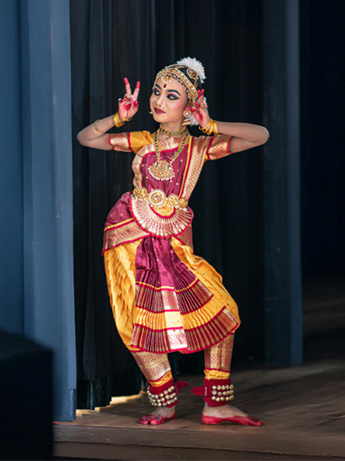
Indian Classical Dance for Kids in Assam: A Parent’s Guide
Indian classical dance is an important part of India’s cultural and artistic heritage. For children, learning a classical dance form can be an opportunity to explore music, movement, rhythm and traditional performance.
In Assam, parents looking for Indian classical dance classes for kids can choose from different forms depending on the child’s interest, age, availability and learning goals.
What Is Indian Classical Dance?
Indian classical dance refers to established dance traditions that have developed over generations and have their own techniques, movements, music and performance traditions.
Some well-known forms include:
- Bharatanatyam
- Kathak
- Odissi
- Kuchipudi
- Manipuri
- Mohiniyattam
- Kathakali
Each form has its own vocabulary and training approach.
For children in Assam, Bharatanatyam and Kathak are among the classical dance options they may encounter at local dance schools.
Why Do Children Learn Classical Dance?
Children may choose classical dance for many different reasons.
Rhythm and Coordination
Classical dance involves coordinated hand, foot and body movements. Regular practice can help children become more comfortable with rhythm and movement.
Discipline and Regular Practice
Learning a classical dance form generally involves repetition and gradual progression. Children learn that improvement comes through regular practice.
Expression
Classical dance combines movement with expression and storytelling, giving children an opportunity to communicate through performance.
Cultural Exposure
Learning an Indian classical dance form can introduce children to traditional music, costumes, stories and performance traditions.
Stage Experience
Dance programmes may provide opportunities for children to perform at cultural events, school programmes or other performances.
Bharatanatyam for Children
Bharatanatyam is one of the best-known Indian classical dance traditions.
Children learning Bharatanatyam may gradually work on:
- Basic postures
- Hand gestures
- Footwork
- Rhythm
- Facial expression
- Body coordination
- Traditional choreography
Training generally progresses step by step rather than expecting beginners to perform advanced sequences immediately.
Kathak for Children
Kathak is another major Indian classical dance form, traditionally associated with North Indian performance traditions.
Children may learn:
- Footwork
- Rhythmic patterns
- Spins
- Hand movements
- Expressions
- Choreography
- Coordination with music
Like other classical forms, Kathak requires regular practice and patience.
What Age Can a Child Start Classical Dance?
There is no single age that is perfect for every child.
Younger children can begin with simple movement and rhythm activities, while older children may be ready for more structured technical training.
Parents should consider:
- The child’s age
- Attention span
- Interest in dance
- Physical comfort
- Class duration
- Teaching approach
The most important thing is that the class is appropriate for the child’s developmental stage.
Is Classical Dance Difficult for Beginners?
Classical dance can appear complicated when watching advanced performers.
However, beginners are normally introduced to the fundamentals gradually.
Children may initially spend considerable time learning basic postures, steps, rhythm and hand movements before moving to more advanced choreography.
This gradual approach is part of classical dance training.
Classical Dance vs Western Dance for Kids
Parents sometimes wonder whether classical or Western dance is more suitable.
The two offer different learning experiences.
| Classical Dance | Western Dance |
|---|---|
| Structured traditional technique | Styles can vary widely |
| Strong connection with Indian music and traditions | Often uses contemporary and popular music |
| Emphasis on specific movements and vocabulary | May include Hip Hop, modern, jazz or freestyle |
| Often progresses through systematic training | Class structure varies by style and instructor |
| Traditional storytelling and expression can be important | Choreography and contemporary expression may be emphasised |
There is no need to treat the two as mutually exclusive. Some children enjoy learning both.
How Should Parents Choose a Classical Dance Class?
Before enrolling your child, consider these points.
1. Identify the Dance Form
Find out whether the class teaches Bharatanatyam, Kathak or another classical form.
2. Check the Age Group
A class for young children should have an age-appropriate teaching approach.
3. Ask About Beginner Training
If your child has never learned classical dance, confirm that beginners are welcome.
4. Understand the Schedule
Classical dance benefits from regular practice, so choose a schedule that your child can maintain.
5. Meet or Observe the Teacher
The teacher’s approach can have a significant impact on a child’s learning experience.
6. Ask About Performance Opportunities
If your child enjoys performing, find out whether students participate in stage programmes or cultural events.
Can Children Learn Classical and Modern Dance Together?
Yes, provided the overall schedule is manageable.
A child might learn Bharatanatyam or Kathak while also attending a modern or Western dance class.
The two forms involve different movement vocabularies, so children may enjoy the variety.
However, parents should avoid filling a child’s schedule with too many activities. Adequate time for school, rest, play and practice is also important.
Indian Classical Dance Classes in Guwahati, Assam
Parents searching for Indian classical dance classes in Guwahati, Assam can explore classes according to the dance form, age group, teacher and schedule.
At Urban Beats Performing Arts, classical dance programmes include Bharatanatyam and Kathak, depending on the current class schedule.
Urban Beats has branches at Rajgarh and Kumarpara in Guwahati, along with other dance and performing-arts programmes for children and adults.
What Should a Child Wear?
For initial classes, comfortable clothing that allows movement is generally sufficient.
As children progress, the teacher may recommend specific practice clothing or traditional dance attire for performances and examinations.
Parents do not necessarily need to purchase expensive costumes before knowing whether the child enjoys the activity.
How Can Parents Support Practice at Home?
Parents can make practice easier by creating a simple routine.
- Keep a small practice area available.
- Encourage regular practice.
- Help the child remember difficult movements.
- Avoid turning practice into pressure.
- Celebrate improvement rather than perfection.
- Allow the child to enjoy the music and movement.
Even short, regular practice can help maintain continuity between classes.
Frequently Asked Questions
Which Indian classical dance is suitable for children?
Several classical forms can be learned by children. The choice can depend on the child’s interest, the availability of qualified instruction and the family’s location.
Can a beginner child learn Bharatanatyam?
Yes. Children can start Bharatanatyam from beginner level and gradually learn its basic movements and techniques.
Can children learn Kathak?
Yes. Kathak can be taught to children through age-appropriate exercises, rhythm, footwork and choreography.
Is classical dance good for children’s fitness?
Classical dance involves physical movement, coordination and repeated practice. Its physical demands vary according to the form, class and intensity.
Can my child learn classical dance without knowing music?
Yes. Basic musical and rhythmic understanding can develop as part of dance training.
Can my child learn classical and Western dance together?
Yes, if the combined schedule is suitable for the child and leaves enough time for school, rest and other activities.
Final Thoughts
Indian classical dance can introduce children to rhythm, movement, expression and India’s rich performing-arts traditions.
For parents in Assam, the right class should be selected based on the child’s interest, age, learning level, schedule and the teaching environment.
If you are exploring Indian classical dance for kids in Guwahati, you can consider beginner-friendly programmes in Bharatanatyam or Kathak and allow your child to discover which style they enjoy.
Start with interest, build the basics and let the love of dance grow naturally.