
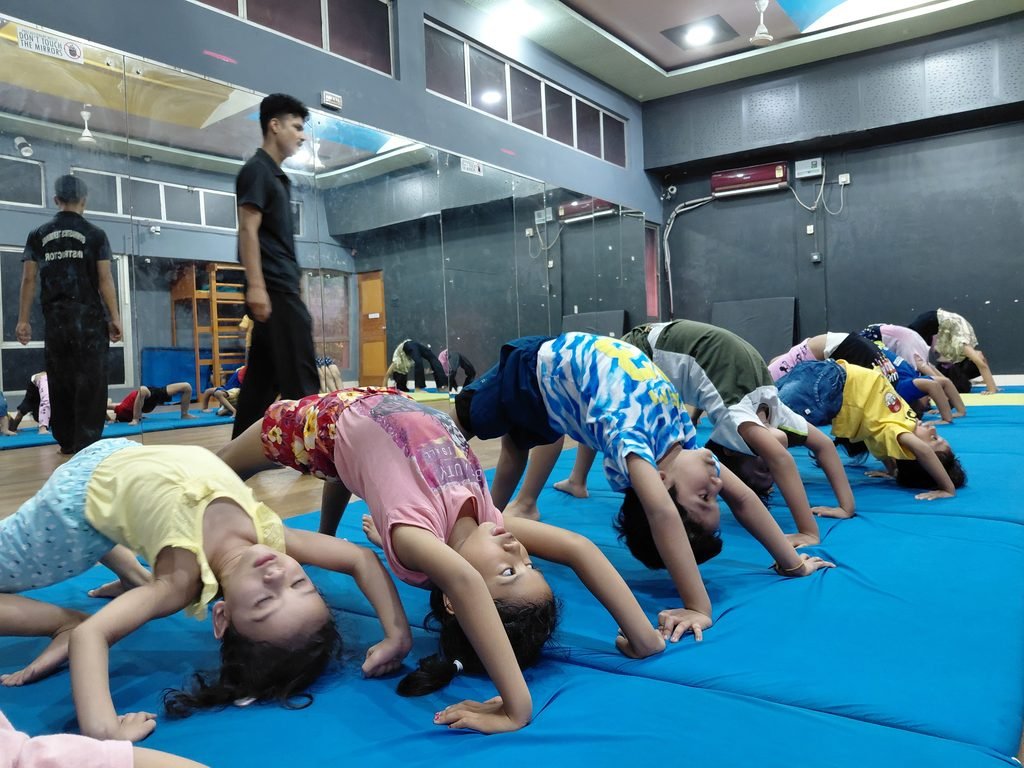
Why Is Gymnastics Good for Children?
Gymnastics is a physical activity that combines movement, balance, flexibility, strength and coordination. For children, it can be an enjoyable way to become more physically active while learning how to control and move their bodies.
Gymnastics does not have to mean competitive training. For many children, beginner-level gymnastics can simply be a structured fitness and movement activity.
When taught appropriately for a child’s age and ability, gymnastics can help develop several useful physical and movement skills.
1. Improves Balance and Coordination
Children use their arms, legs and body together in many gymnastics movements.
Practising activities such as balancing, jumping, rolling and controlled movement can help children develop better coordination and body control.
These skills can also be useful in other activities such as dance, swimming and sports.
2. Develops Strength
Gymnastics involves movements that require children to support and control their own body weight.
Age-appropriate exercises can help develop strength in areas such as the:
- Legs
- Arms
- Shoulders
- Back
- Core
The goal for young children should be appropriate movement and physical development rather than heavy strength training.
3. Supports Flexibility
Flexibility is an important part of many gymnastics movements.
Regular, age-appropriate stretching and movement can help children work on their range of motion. Flexibility should be developed gradually and should never involve forcing a child into uncomfortable positions.
4. Builds Body Awareness
Gymnastics teaches children to understand how their bodies move.
They learn concepts such as:
- Where their hands and feet are positioned
- How to maintain balance
- How to control movement
- How to land safely
- How to change direction
This awareness can be useful beyond gymnastics and can support participation in many physical activities.
5. Encourages an Active Lifestyle
Children today may spend considerable time sitting for schoolwork, screens and other activities.
A regular gymnastics class provides an opportunity to move, exercise and have fun in a structured environment.
The most important thing is to help children develop positive associations with physical activity rather than making exercise feel like a compulsory task.
6. Can Improve Confidence
Learning a new movement can take time.
When a child eventually manages a skill that they have been practising, it can provide a sense of achievement.
Small milestones—such as improving balance, completing a movement or becoming more comfortable with an exercise—can help children feel more confident about trying new activities.
7. Teaches Patience and Practice
Gymnastics requires practice.
Children may not perform every movement correctly on their first attempt. A good class environment teaches them that improvement can happen gradually.
This can encourage habits such as:
- Trying again
- Listening to instructions
- Practising regularly
- Learning from mistakes
- Progressing step by step
8. Can Complement Dance Training
Gymnastics and dance can work well together.
Dance focuses heavily on rhythm, musicality, movement and expression, while gymnastics can provide opportunities to work on flexibility, balance, coordination and body control.
For children who enjoy dancing, gymnastics can therefore be an additional movement-based activity.
9. Helps Children Learn Safe Movement
A properly structured gymnastics class should teach children how to perform movements according to their ability and age.
Warm-ups, controlled exercises, appropriate progressions and supervised practice are important parts of a children’s gymnastics programme.
Children should not be pushed into advanced movements before they are ready.
At What Age Can Children Start Gymnastics?
There is no single age that is suitable for every child.
Young children can often begin with basic movement activities designed around their developmental stage. These may include simple balance exercises, jumping, coordination games, stretching and other age-appropriate movements.
For younger children, especially toddlers and preschoolers, the class should be more about movement, play, coordination and basic physical skills rather than advanced gymnastics techniques.
Parents should ask the instructor what age groups the programme is designed for before enrolling.
What Should Parents Look for in a Kids Gymnastics Class?
Before choosing a gymnastics class, parents can consider:
Age-appropriate activities
The exercises should match the child’s age, physical ability and experience.
Qualified and attentive instructors
Children should receive clear instructions and proper supervision throughout the class.
Safe training environment
Look for suitable flooring, adequate space and equipment appropriate for children’s activities.
Gradual progression
Children should learn basic movements before moving towards more difficult skills.
Positive atmosphere
A supportive environment can make children more comfortable and willing to participate.
Reasonable class duration
Younger children may benefit from shorter, engaging sessions rather than long and exhausting training periods.
Gymnastics for Kids in Guwahati
Parents looking for children’s physical activity programmes in Guwahati can consider gymnastics alongside dance, martial arts and other extracurricular activities.
At Urban Beats Performing Arts, gymnastics is offered as part of its children’s activity programmes, with classes designed around movement, fitness, flexibility, coordination and age-appropriate training.
Urban Beats has branches at Rajgarh and Kumarpara in Guwahati, with specific classes and schedules depending on the current batches.
Parents can contact the studio to check the current age groups, timings and available batches before enrolling.
Gymnastics vs Other Activities for Children
There is no requirement for a child to choose only one activity.
A child who enjoys dance might combine dance with gymnastics. Another child may prefer gymnastics alongside swimming, football, martial arts or another sport.
The right activity is often the one that matches the child’s interests, age, schedule and comfort level.
The objective should be to encourage children to stay active while enjoying the learning process.
Frequently Asked Questions
Is gymnastics good for children?
Gymnastics can be a useful physical activity for children when it is age-appropriate, properly supervised and taught in a safe environment. It can support skills such as balance, coordination, flexibility, strength and body awareness.
Does gymnastics make children taller?
Gymnastics should not be promoted as a way to make children taller. Height is influenced largely by genetics and overall growth and development. Gymnastics can help children develop physical skills and fitness, but it does not guarantee increased height.
Is gymnastics safe for kids?
Gymnastics can be appropriate for children when activities are properly selected for their age and ability and are performed with suitable supervision and safety measures.
Can a beginner join gymnastics?
Yes. Many children’s programmes include beginners and start with basic movements before progressing to more challenging skills.
Can gymnastics help with dance?
Yes. Skills such as balance, flexibility, coordination and body control can complement dance training.
How often should children attend gymnastics?
The appropriate frequency depends on the child’s age, programme and overall activity level. Parents should also consider school, rest and other activities when planning a child’s weekly schedule.
Final Thoughts
Gymnastics can be much more than learning impressive movements. For children, it can provide an enjoyable way to practise balance, coordination, flexibility, strength, body awareness and confidence.
The most important factors are choosing an age-appropriate programme, ensuring proper supervision and allowing the child to progress comfortably.
For parents in Guwahati, gymnastics can also be combined with other activities such as dance and fitness to create a balanced extracurricular routine.