
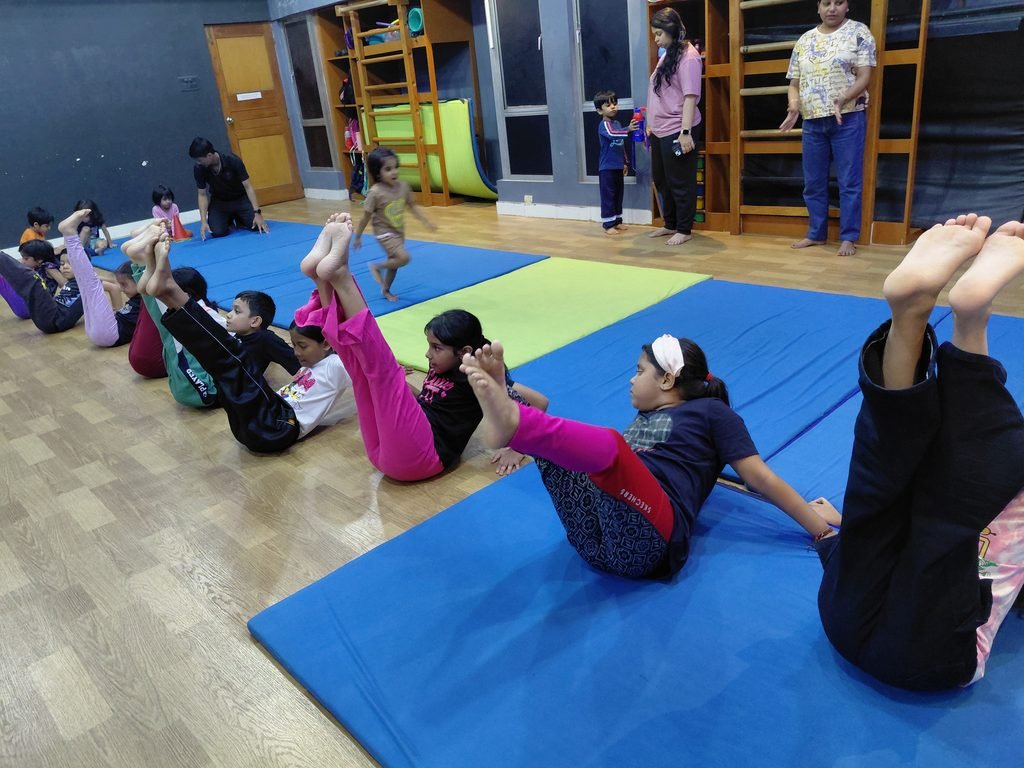
How Does Gymnastics Help Children Become Stronger?
Children naturally develop physical strength as they grow, but regular physical activity can help them develop better movement skills and physical fitness.
Gymnastics is one activity that uses many different muscle groups while teaching children how to control their bodies.
Rather than focusing on lifting heavy weights, children’s gymnastics generally uses bodyweight movements, balance exercises, jumping, climbing, stretching and controlled movements that are appropriate for their age and ability.
1. Gymnastics Uses the Child’s Own Body Weight
Many basic gymnastics exercises require children to support, move or control their own body weight.
Activities such as crawling, climbing, hanging, jumping and balancing can involve different muscle groups.
This makes gymnastics a movement-based way for children to practise strength and control.
2. It Develops Core Strength
The muscles around the abdomen, back and pelvis help provide stability during movement.
Gymnastics activities often require children to maintain a controlled body position, which can help them practise using their core muscles.
A stronger and better-controlled core can also support balance and movement during other activities.
3. It Strengthens the Legs
Children use their legs in activities such as:
- Jumping
- Landing
- Squatting
- Balancing
- Running
- Climbing
These movements can help children develop lower-body strength and coordination.
4. It Develops Upper-Body Strength
Some gymnastics activities involve supporting the body with the arms and shoulders.
Depending on the child’s age and ability, exercises may include modified supporting, hanging or climbing movements.
These activities can gradually help children practise upper-body strength without requiring traditional gym-style weight training.
5. Strength and Flexibility Work Together
Being physically strong is not only about having powerful muscles.
Children also need mobility and flexibility to move comfortably.
Gymnastics combines strength-related movements with stretching and controlled movement, allowing children to work on several physical qualities together.
6. It Improves Balance and Body Control
Strength becomes more useful when a child can control how they use it.
Gymnastics requires children to maintain positions, change direction, land and move with control.
This can help develop balance, coordination and body awareness alongside physical strength.
7. Children Learn Through Movement
One advantage of children’s gymnastics is that physical development can happen through activities that feel like play.
Instead of asking a young child to perform repetitive strength exercises, instructors can use age-appropriate movement activities to encourage children to:
- Jump
- Roll
- Balance
- Climb
- Crawl
- Stretch
- Move through different positions
This can make physical activity more enjoyable.
8. Regular Practice Supports Physical Fitness
Consistency matters.
A single gymnastics class will not transform a child’s physical strength. Regular participation, combined with adequate nutrition, sleep and other physical activity, contributes to overall fitness and development.
The amount of training should be appropriate for the child’s age and individual needs.
Can Gymnastics Make Children Stronger Than Other Sports?
There is no need to view gymnastics as a competition against other activities.
Different sports and activities develop different combinations of skills.
For example:
- Gymnastics: balance, flexibility, coordination, body control and strength
- Swimming: endurance, coordination and full-body movement
- Football: running, agility, coordination and endurance
- Dance: rhythm, coordination, flexibility and movement
- Martial arts: coordination, balance, discipline and physical fitness
The most useful activity is often one that a child enjoys and participates in consistently.
Is Strength Training Safe for Children?
Children can participate in age-appropriate strength and resistance activities when they are properly supervised and the exercises are suitable for their developmental stage.
Children’s gymnastics should not be treated like an adult bodybuilding or weight-training programme.
The emphasis should be on movement quality, technique, coordination and gradual development rather than maximum strength.
How Can Parents Encourage Strength and Fitness at Home?
Gymnastics classes can be complemented by everyday physical activity.
Parents can encourage children to:
- Play outdoors
- Walk or cycle
- Run and play active games
- Climb on age-appropriate playground equipment
- Participate in sports or dance
- Reduce excessive sedentary screen time
- Get adequate sleep
Children generally benefit from variety rather than doing only one type of physical activity.
Gymnastics for Kids in Guwahati
For parents looking for structured physical activities in Guwahati, children’s gymnastics can be an option for developing movement skills, coordination and physical fitness.
Urban Beats Performing Arts offers gymnastics training for children in Guwahati, with age-appropriate activities focused on movement, flexibility, coordination, fitness and body control.
Urban Beats has branches at Rajgarh and Kumarpara in Guwahati, with current batches and schedules varying according to the programme.
Parents can contact the studio to check the available age groups and timings.
What Should Parents Look for in a Children’s Gymnastics Class?
Before enrolling, consider:
1. Age-appropriate exercises
The programme should match the child’s age and ability.
2. Proper supervision
Children should receive clear instructions and attentive supervision.
3. Safe equipment and space
The training environment should be suitable for children’s physical activities.
4. Gradual progression
Children should develop basic skills before attempting more advanced movements.
5. Positive teaching
The instructor should encourage children rather than pressure them to perform beyond their ability.
Frequently Asked Questions
Does gymnastics build strength in children?
Yes. Age-appropriate gymnastics can provide opportunities for children to develop strength through bodyweight movements, climbing, jumping, supporting and controlled exercises.
Can gymnastics make a child physically stronger?
Regular, appropriately structured gymnastics can contribute to physical strength and overall fitness. However, children’s development varies, and gymnastics is only one part of a healthy active lifestyle.
Does gymnastics affect children’s height?
Gymnastics should not be promoted as a way to increase height. Children’s height is influenced by factors such as genetics and overall growth and development.
Is gymnastics suitable for beginners?
Yes. Beginners can start with basic movements and gradually progress as their skills and confidence develop.
Can gymnastics and dance be done together?
Yes. Gymnastics can complement dance by providing additional practice in flexibility, balance, coordination and body control.
How often should children practise gymnastics?
The appropriate frequency depends on the child’s age, programme and other activities. School, rest and recovery should also be considered when planning a weekly routine.
Final Thoughts
Gymnastics can help children develop strength in a natural, movement-based way. Instead of focusing on heavy weights or advanced exercises, children’s gymnastics generally uses bodyweight movements, balance, climbing, jumping, flexibility and controlled physical activity.
The goal should be healthy physical development, enjoyment and gradual improvement—not pushing children beyond their ability.
For parents in Guwahati, a well-supervised gymnastics programme can be one useful addition to a child’s overall active lifestyle.